
The Truth About Catamarans
The Good
The Bad
The Ugly
We touched on this above, but let’s expand:
“How dare you” you say?
Well it’s true, there are serious drawbacks.
- Stability – one of the biggest risks to sailors is fatigue. A stable platform means better rest, easier food preparation, and more comfort on and off watch. This ultimately leads to better decision making and safer passages.
- Speed — Mark Twight, author of Extreme Alpinism: Climbing Light, Fast, and High, advocates for a ‘fast and light’ approach to mountaineering. His philosophy is that mountains are dangerous places, and minimizing time on a climb reduces exposure to risk. I believe this same logic can be applied to ocean passages.
- Twin Hull – this has a number of advantages. First is the draft. The shallow draft allows you to anchor closer to the beach and tuck into anchorages that a deeper draft monohull may not have access to. Second, the twin hulls allow you to easily go dry providing access to parts of the hull typically under water for cleaning, maintenance, and even emergency repairs such as failed thru-hulls. Third this means twin engines resulting in redundancy and excellent tight quarter handling.
- Space – Square footage is a significant advantage of a catamaran. The twin hulls provide enhanced privacy, with at least two, and often three, outdoor areas available for relaxation and enjoyment. Additionally, there is ample room for storing gear and recreational equipment, making it a practical and comfortable choice.
- Cost – Even in the O’Kelly’s video I talked about earlier, they end the video with saying that while a cat is better, a monohull you can afford now is better than saving up for a cat for 5 years. This gap gets substantially larger when you move from production cats designed for the charter market to higher performance cats like Outremer and HH.
- Cost of ownership – Cats are just more complex. two hulls, three or more heads, two engines, sail drives, heaver rigging, it all adds up.
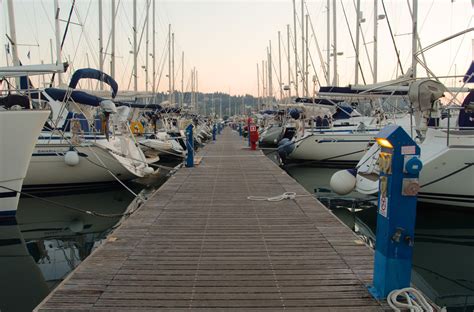
- Moorage – While the twin engines do make tight quarter maneuverability much easier, you are still handling a 25+/- foot wide boat. Most slips in most marinas are just not designed for boats with these proportions. This seriously limits where you can tie up. In addition, when you do find a spot to tie, it’s going to cost you far more due to the required width.
- Upwind Sailing Performance – Upwind performance on a catamaran is inherently limited compared to monohulls. Production models, such as Lagoon and Leopard, are not particularly efficient when sailing upwind. Even the better-performing designs tend to be restricted to approximately 60 degrees off the wind, making them less capable of pointing high compared to other vessel types.
- Structural – This turned out to be one of the biggest decision factors for us. To be clear, there are plenty of well-built ocean-going cats out there that are designed to handle the rigors of ocean crossings, but unfortunately these were out of our price range. Most importantly, our budget meant that we would most likely settle on a 20 or so year old Lagoon, Bali, or Leopard production cat. Unfortunately, there is enough history of structural bulkhead failures that it’s not a risk we were willing to take.
- Rigging Loading – Based on my limited experience, when a monohull encounters a gust, the boat heels and the sails lose power. In contrast, with a catamaran, almost all the force is transferred into the rigging. If the gust is sufficiently strong, the rigging may fail or the vessel may capsize, and unlike monohulls, catamarans do not right themselves.
- Confused or jerky motion – Catamarans stay level, but their twin hulls hit waves differently, creating sharper movements. Side-on, one hull might ride a crest while the other dips into a trough, causing a quick roll. Facing waves head-on or from behind, they pitch more abruptly without a keel to soften the motion. In choppy seas, these effects combine to give a jerkier ride than the smoother flow of a monohull
Size
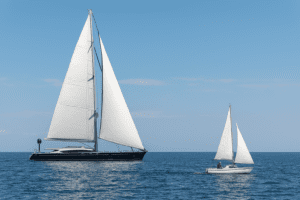
Doesn’t it always come back to size? Seriously though, this really was number one for us. It was important that we had space to not only accommodate another couple comfortably but also had room for a couple full size bikes. Turns out bike storage is hard to come by. We landed on a minimum length of 43 ft, and we didn’t want anything over 50 ft
Sugar Scoop
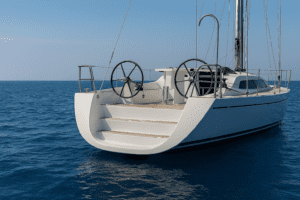
Some will tell you that ocean crossing boats don’t have sugar scoops. Well, that’s simply not true. While folks have climbed over gunwales for years getting in and out of their dinghies, we agreed that stepping on and off a dinghy from a sugar scoop was a requirement. We are heading out to have fun, explore and enjoy ourselves. Comforts like getting on and off the dinghy matter.
Standing Room
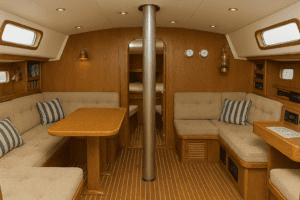
During our ASA classes on the Catalina 42 MKII, one thing I realized was that I wanted room inside to stand around and socialize. I really didn’t want a salon that was so tight that if you were inside, you were in the galley or sitting at the settee. This is definitely a compromise, and I am sure we will curse this checkbox at some point during a lumpy crossing, but again, we will be spending most of our time on the hook.
Displacement
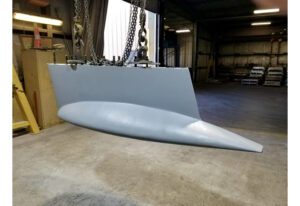
While the majority of our time on our new home will be anchored up in some remote bay, we do intend to travel, and cross oceans. We are committed to not having a schedule other than the one dictated by mother nature, but we also realize that we are going to find ourselves in some weather at some point. We set our minimum displacement at 25,000 lbs.
Masthead/Cutter Rig
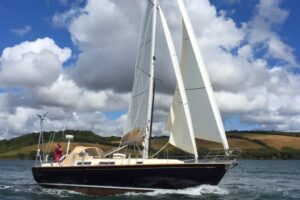
Initially a cutter rig was an absolute must. Unfortunately, realization set in pretty quickly that we were running into conflicting priorities while staying in budget. As time wore on compromise won out and we agreed that a masthead sloop would do, and a cutter rig would be wonderful if we found the right one.
Center Cockpit
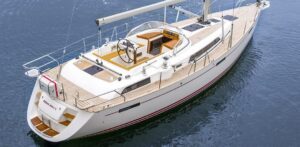
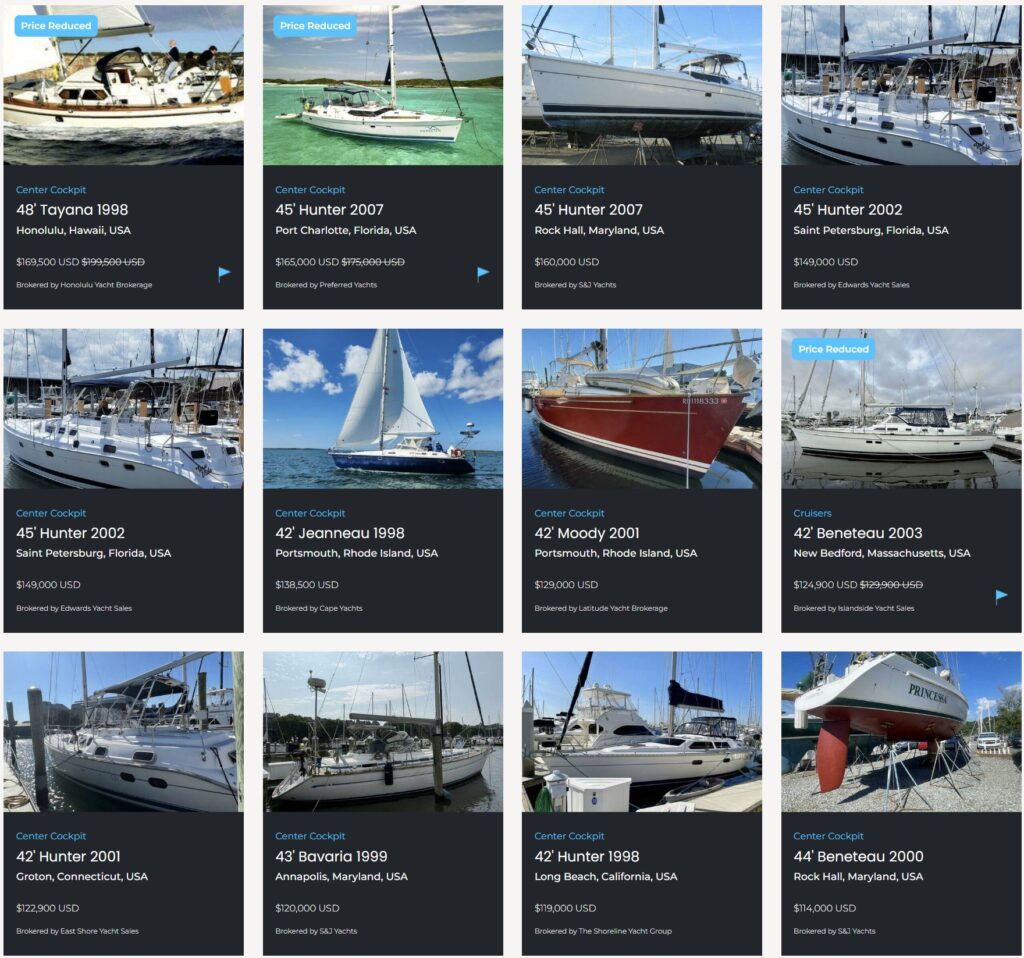
Center Cockpit was an interesting one because it was probably the last box to make it on the list, but after looking at literally 100s of boats, it became one of the most important. Visibility from a center cockpit is amazing. Sitting high in the center of the boat is a very comfortable and dry place to be. The main sheet connects at the aft end of the boom and the traveler sits behind the cockpit making it easy to access from the helm and reduces stress on the rigging. And last but not least, the aft cabin with centerline queen birth is nicer than most cats.
Ready to start looking at boats?
Shortening The List
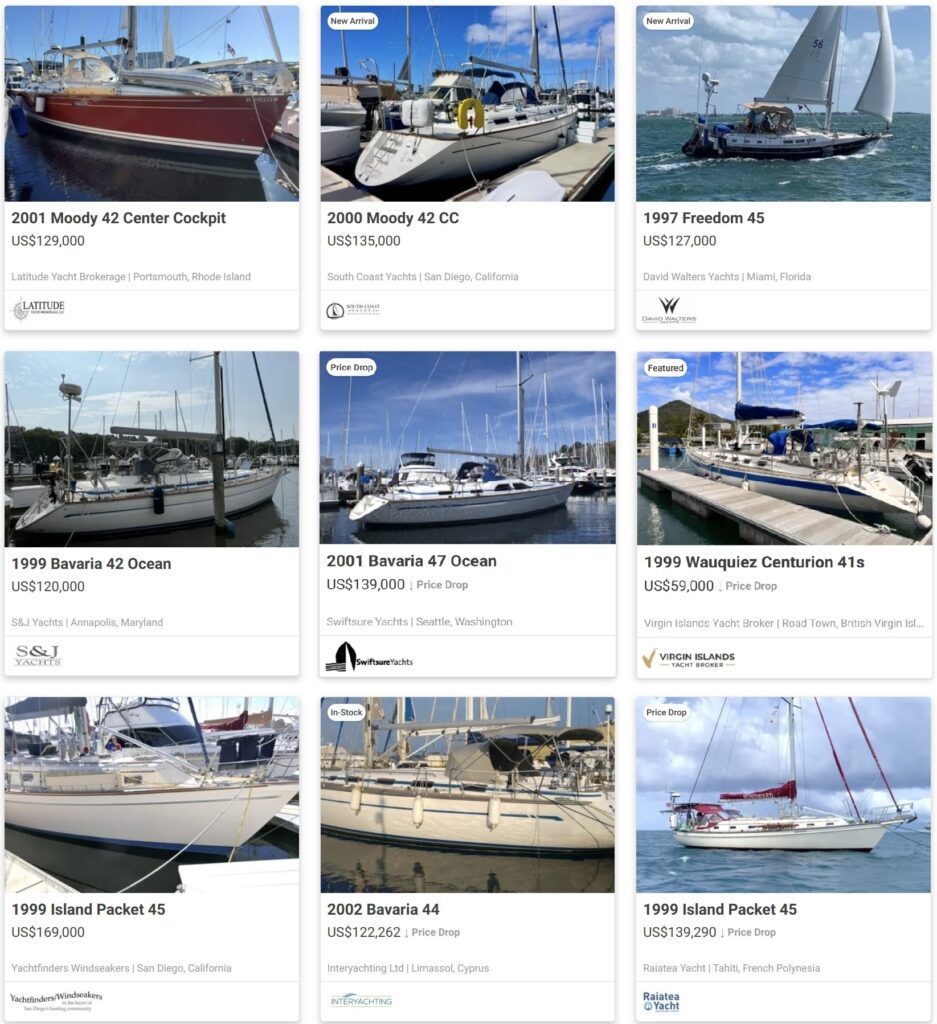
It’s remarkable how quickly over 60,000 boats filters down to a couple dozen.
Naturally there were other criteria on our list of boxes that filtered the boats we looked at:
– We wanted something already in the US
– We were willing to take on projects to make her ready to go to sea, but there were limits. We were willing to do little to no interior woodwork, hull must be in good shape, no screw fastened teak decks.
– We were targeting boats built between 2000 & 2010 with some limited flexibility.
– And let’s not forget the almighty budget which eliminated Hallberg-Rassy, Amel, Oyster, and the rest of the high end blue water cruisers.
Makes that hit the mark
Moody — A proven, well‑built bluewater boat with elegant lines and interiors that feel more like fine furniture than yacht joinery. A few Moodys checked nearly all of our critical boxes, including one in Florida that slipped away before we had a chance to visit. They carried the weight of possibility, and a couple even made it into our final list. But for reasons that were more practical than romantic, they ended up in the #2 or #3 spot.
Taswell — Built by Ta Shing, a yard with a reputation for uncompromising quality. And let’s be honest, it’s fun to say the name. Most Taswells are cutter‑rigged, with interiors that exude craftsmanship. We looked at a couple, but the reality didn’t match the reputation: neglected interiors and screw‑fastened teak decks turned them into a no‑go.
Jeanneau — For a time, the Sun Odyssey 43 DS held our attention. Sleek, modern, and inviting, the salon bathed in natural light that defines Deck Salons, it seemed like a real contender. But doubts crept in. Its light displacement raised questions about how it would ride out rough seas, and in the end, confidence gave way to caution.
One that really stood out
Our first trip to Seattle was meant to be about a Swan 391. Classic lines, pedigree, the kind of yacht you expect to see crossing oceans and exploring the far reaches. She was beautiful, and exactly what we imagined she would be. It was while we were standing in the salon admiring the incredible woodwork that reality hit us, and we realized that our definition of “right” had to change. Sensing our change in mood, the broker leaned in with a suggestion: “You should see another listing I’ve got.”
It wasn’t on our radar. In fact, it was nowhere near the shortlist we had carefully built. Yet that detour changed everything. The boat we stepped aboard that day became the standard against which all others would be judged.
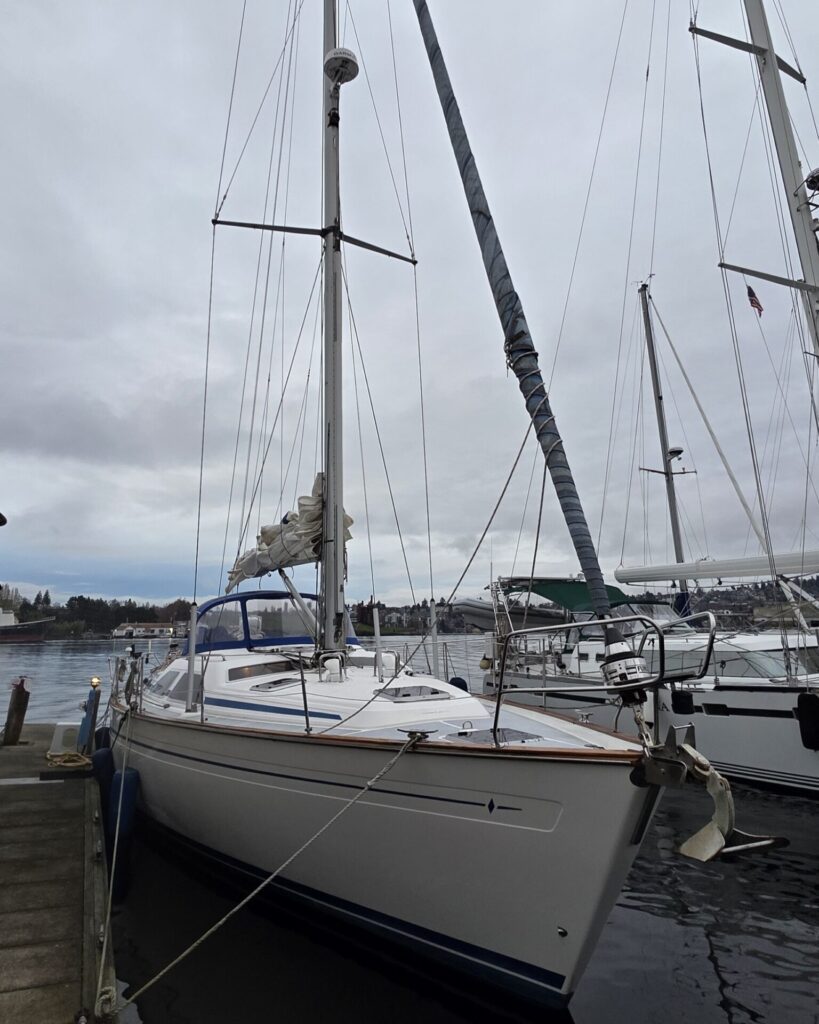
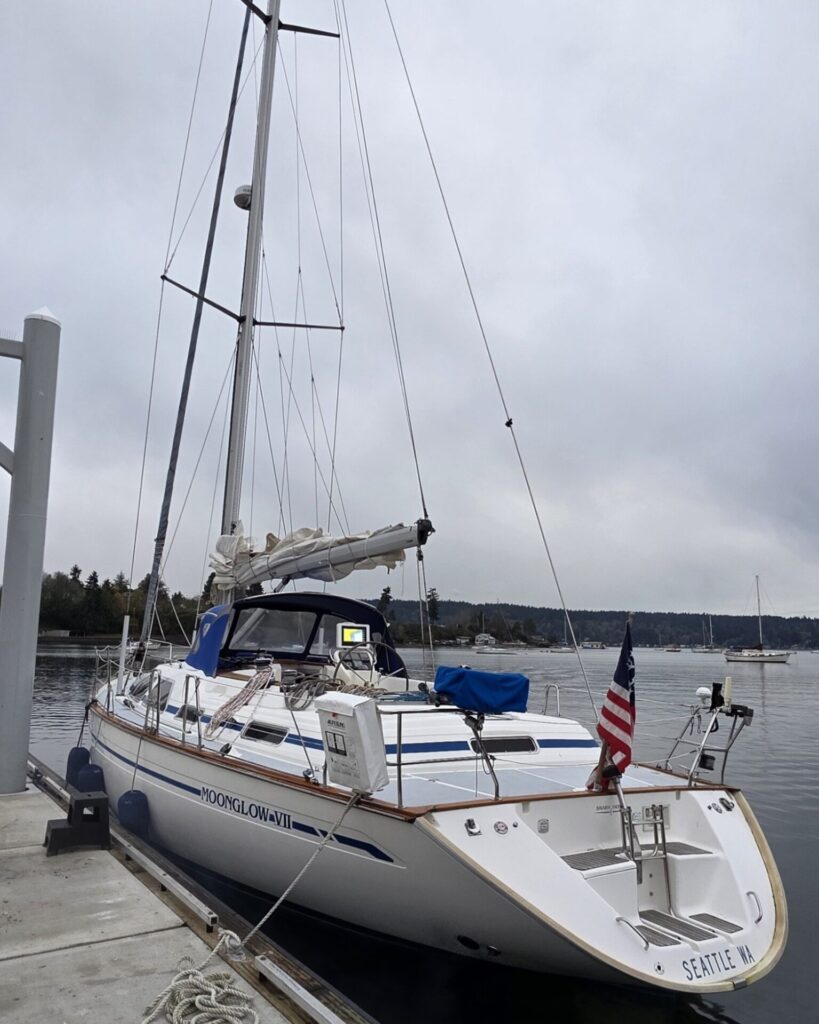
There were only eight of them ever built, though they came from one of the largest production builders in the world. Manufactured in Germany, they carried a name that most sailors associate with production charter fleets rather than ocean crossings. Bavaria.
This one was different. Moonglow VII — a 2001 Bavaria Ocean 47. A center‑cockpit masthead sloop with a sugar scoop stern, an open salon, and cabins that spoke to both comfort and practicality. A generous aft berth, a forward V‑berth, and — the surprise — a bunk room that would double as workshop and bike storage.
The Ocean series was Bavaria’s brief experiment in building true bluewater cruisers. From the late 1990s until the mid‑2000s, they produced yachts intended to cross oceans, not just anchor in bays. The 47 was designed as a capable passage‑maker, a boat that could carry you far beyond the horizon. And then, just as quickly, Bavaria shifted its focus back to the charter market. The Ocean line was discontinued, leaving only a handful of these rare cruisers scattered across the world.
For us, Moonglow VII was not just another boat. She was the unexpected benchmark, the vessel that reframed our search and while still technically out of our price range, was never far from our thoughts.
Yay Moonglow. Looking forward to more updates.
Thanks David! Can’t wait till you get to meet her!